# **ADHD: Understanding Attention-Deficit/Hyperactivity Disorder in Everyday Life** Attention-Deficit/Hyperactivity Disorder...
Read More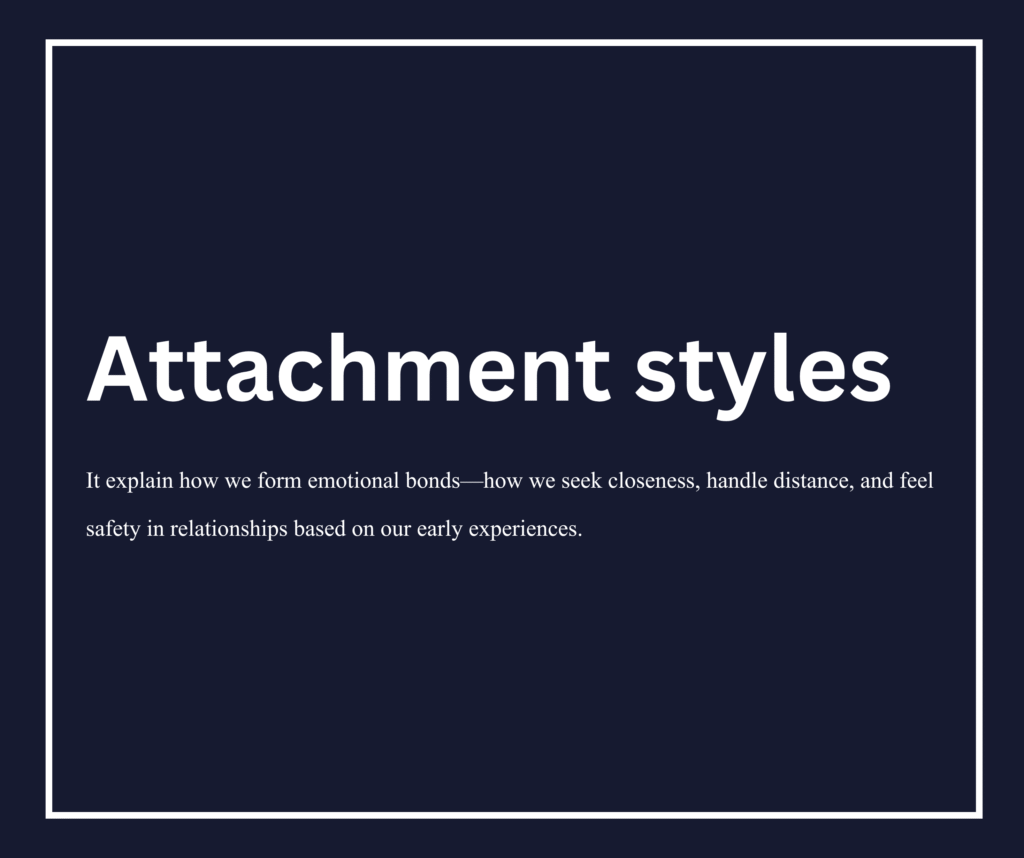
Attachment styles describe the patterns through which individuals form emotional bonds, respond to closeness, handle conflict, and experience intimacy. These patterns begin forming in early childhood based on the kind of caregiving a person receives, and they continue to influence relationships throughout adulthood. Attachment theory, originally proposed by John Bowlby and further developed by Mary Ainsworth, explains how our earliest emotional experiences create internal templates that shape how we view ourselves, others, and relationships. These templates become the foundation for how we seek connection, manage fears, express needs, and respond to emotional distance or conflict.
Attachment is not just about childhood—it affects friendships, romantic relationships, family interactions, and even workplace dynamics. People often repeat their attachment patterns unconsciously, not because they choose to but because the emotional wiring formed in childhood becomes deeply embedded. Understanding attachment styles allows individuals to recognise their emotional patterns, heal relational wounds, and create healthier connections.
Attachment research identifies four primary styles: secure, anxious, avoidant, and disorganised. Each reflects different patterns of emotional regulation and relational behaviour.
A secure attachment style develops when caregivers are consistent, attentive, and emotionally responsive. Individuals with secure attachment typically feel comfortable with intimacy, trust others easily, and communicate openly. They manage conflict in a balanced way and believe they are deserving of love and support. Securely attached adults form the most stable and fulfilling relationships because their early environment taught them that closeness is safe.
Anxious attachment forms when caregivers are inconsistent—sometimes loving and available, other times distant or unpredictable. This inconsistency creates uncertainty in the child, who grows up constantly seeking reassurance and fearing abandonment. Adults with anxious attachment may feel clingy, overly sensitive to changes in tone or behaviour, and worried about their partner’s feelings. They may overthink small interactions and assume the worst, not because they want to be dramatic but because their nervous system has learned to stay alert for signs of disconnection.
Avoidant attachment develops when caregivers are emotionally unavailable, dismissive, or rejecting. As a result, children learn to self-soothe and avoid relying on others. In adulthood, individuals with avoidant attachment often value independence to an extreme degree, struggle with emotional vulnerability, and may withdraw when relationships feel too intimate. They appear confident and self-reliant on the outside, but internally they may struggle with expressing needs or trusting others deeply.
Disorganised attachment develops when caregivers are both a source of comfort and fear—often due to trauma, abuse, or unpredictable behaviour. Adults with disorganised attachment tend to experience conflicting emotions: they crave closeness but also fear it, leading to highly inconsistent or confusing relationship patterns. They may switch between anxious and avoidant behaviours, struggle with emotional regulation, and have difficulty feeling safe in relationships.
Attachment styles influence how people communicate, how they react to emotional closeness, and how they handle relationship problems. Anxiously attached individuals may constantly seek reassurance, fear being replaced, or worry excessively about misunderstandings. Avoidantly attached individuals may shut down during conflict, struggle with expressing emotions, or prefer distance to preserve a sense of control. Disorganised individuals may find relationships overwhelming, unpredictable, or emotionally chaotic, making it difficult to maintain stability.
Attachment also affects self-esteem and the ability to express needs. People with anxious attachment may feel they are “too much” or fear that emotional needs will push others away. Those with avoidant attachment often feel pressure to handle everything alone, believing vulnerability is dangerous. Meanwhile, individuals with disorganised attachment may feel torn between wanting connection and fearing the pain it could bring.
These patterns are not character flaws but survival mechanisms formed in childhood. Over time, however, they can limit emotional intimacy, affect relationship satisfaction, and lead to repeated cycles of misunderstanding or withdrawal.
Attachment styles are typically understood through therapeutic conversations, personal reflections, and psychometric tools. Common assessments include the Adult Attachment Interview (AAI), Experiences in Close Relationships Scale (ECR), and Relationship Structures Questionnaire (RSQ). These tools explore early experiences, emotional reactions, relational patterns, and underlying beliefs about self-worth and trust. Many people recognise their attachment style intuitively once they learn the characteristics and reflect on their relational history.
Attachment styles are not fixed; they can evolve through healing, self-awareness, healthy relationships, and therapy. Someone with anxious attachment can develop more stability by learning emotional regulation, building self-worth, and experiencing consistent support. Individuals with avoidant attachment can become more secure by learning to trust, express vulnerability, and understand the roots of their emotional distancing. Even disorganised attachment can shift toward security through trauma-informed therapy, safe relational experiences, and the gradual rebuilding of trust.
Secure attachment is not perfection—it is the ability to communicate needs, handle conflict without shutting down, and maintain emotional balance. Many adults develop earned secure attachment later in life when they engage in self-work or form relationships with emotionally stable and supportive partners.
Therapy provides a safe environment for individuals to understand their attachment patterns, explore early experiences, and develop healthier ways of relating. A psychologist helps clients identify their emotional triggers, build communication skills, challenge their internal beliefs about love and worth, and create new relational habits. For individuals with trauma-based attachment challenges, trauma-focused therapies such as EMDR, somatic therapy, and inner child work are often used.
Therapy also helps individuals rewire their nervous system responses. Whether someone withdraws, becomes anxious, or feels overwhelmed, these patterns can gradually shift with consistent therapeutic support and emotional awareness.
Building secure attachment involves small, consistent practices such as expressing needs clearly, noticing emotional reactions without judgment, setting healthy boundaries, learning to self-soothe, and developing trust in relationships. Reflecting on childhood experiences, understanding past patterns, and recognising triggers helps individuals navigate relationships with more clarity. Most importantly, practising self-compassion and giving oneself permission to grow is essential, as attachment healing is a gradual process.
Attachment styles explain why some relationships feel comforting while others feel confusing or overwhelming. They highlight how deeply our early emotional experiences shape our adult connections, communication patterns, and sense of safety. The good news is that attachment patterns are not destiny. With self-awareness, healthy relationships, and therapeutic support, anyone can move toward a more secure sense of attachment and create healthier, more fulfilling relationships.
Emotion Regulation refers to the ability to recognise, understand, and...
Read MoreConnect with others on a shared path of growth, healing, and support. You’re not alone—we’re in this together.
WhatsApp us