# **ADHD: Understanding Attention-Deficit/Hyperactivity Disorder in Everyday Life** Attention-Deficit/Hyperactivity Disorder...
Read More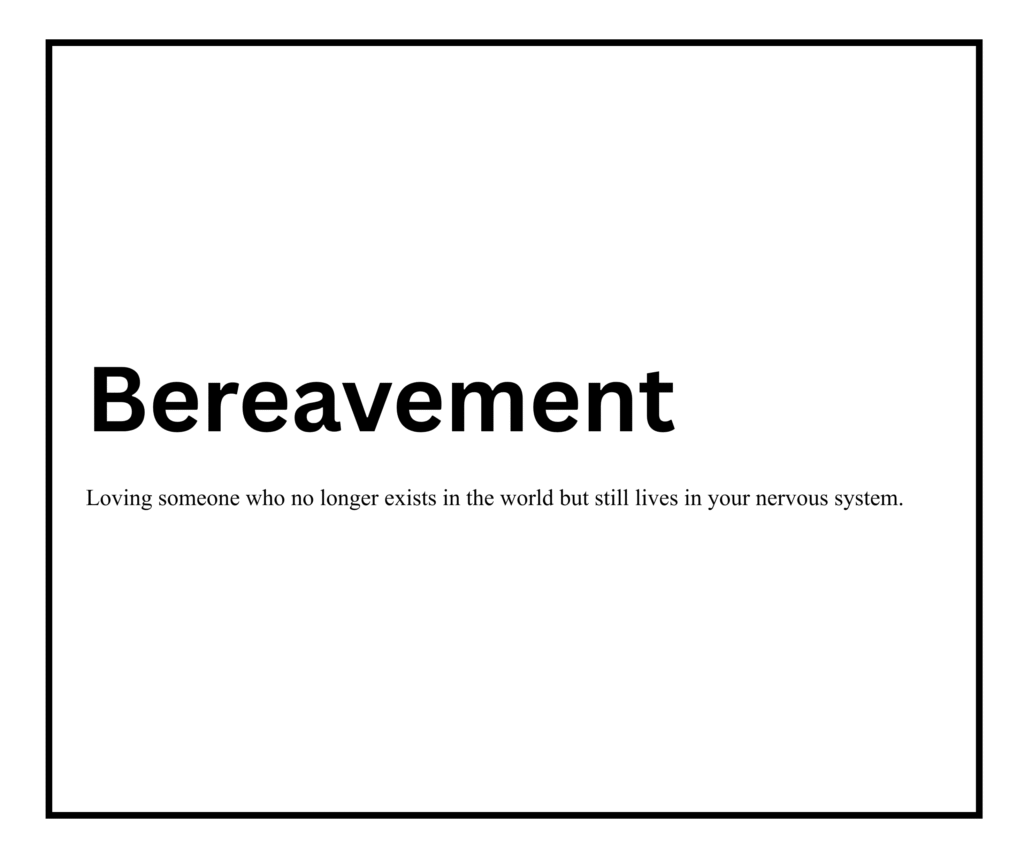
Bereavement, commonly referred to as grief, is the emotional response to losing someone or something deeply meaningful. While it is most often associated with the death of a loved one, grief can also arise from the loss of a relationship, health, identity, job, home, or any significant part of one’s life. Grief is not a single emotion; it is a complex set of reactions involving sadness, longing, confusion, anger, numbness, and even relief in certain circumstances. These responses can feel disorienting, unpredictable, and overwhelming. Bereavement is not a sign of weakness but a natural human process of adjusting to life without what was lost. Everyone grieves in their own way, and the intensity and duration vary widely.
Grief develops when a person forms a deep emotional attachment and that bond is disrupted. The intensity of grief reflects the depth of love, connection, and meaning the person or experience held. When loss occurs, the brain must adjust to a new reality, often creating emotional and cognitive shock. Factors influencing grief include the nature of the loss, the individual’s emotional resilience, past trauma, cultural beliefs, and the level of support available. Sudden or traumatic losses tend to produce more intense and complicated grief reactions. The grieving process is influenced not only by the external event but also by the individual’s internal resources and psychological history.
Symptoms of bereavement can be emotional, cognitive, physical, and behavioural. Emotionally, individuals may feel sadness, guilt, anger, loneliness, and yearning. Some feel numb or disconnected, finding it difficult to express any emotion at all. Cognitive symptoms may include difficulty concentrating, intrusive memories, disbelief, or constant thoughts about the loss. Physically, grief can cause fatigue, sleep disturbances, appetite changes, chest tightness, or a feeling of heaviness in the body. Behaviourally, individuals may withdraw from social interactions, avoid reminders of the loss, or become overly focused on memories. These symptoms fluctuate; some days feel manageable, while others bring intense waves of sorrow.
Diagnosis is not always necessary unless grief becomes prolonged or complicated. Mental health professionals use clinical interviews to differentiate normal grief from Persistent Complex Bereavement Disorder or depression. Tools such as the Inventory of Complicated Grief (ICG), Prolonged Grief Disorder Scale (PG-13), or grief questionnaires help assess the severity and duration of symptoms. Normal grief typically decreases in intensity as time passes. Complicated grief, however, persists for months or years, causing significant impairment. Understanding the type of grief allows therapists to provide appropriate support and identify whether deeper trauma, unresolved emotions, or other psychological conditions are influencing the experience.
Therapy is often highly effective for individuals experiencing intense or prolonged grief. Grief counseling provides a safe space to express emotions, process the loss, and understand the meaning behind it. Cognitive Behavioural Therapy (CBT) helps challenge self-blame, guilt, or negative beliefs. Narrative therapy allows individuals to explore their relationship to the loss and integrate it into their personal story. Acceptance and Commitment Therapy (ACT) helps individuals learn to coexist with grief rather than suppress it. For traumatic or sudden losses, trauma-informed approaches or EMDR may be used to reduce distress. Support groups can also be valuable, offering connection with others who understand the experience. Medication is typically used only when grief triggers severe anxiety, depression, or sleep disturbances.
A psychologist guides individuals through the emotional complexity of bereavement. They help identify unresolved emotions, validate the grieving process, and provide coping strategies. Psychologists teach tools such as grounding techniques, emotional regulation, and ways to manage intrusive thoughts. They address guilt, anger, or regret, helping individuals understand that grief does not follow a linear path. For individuals struggling with complicated grief, psychologists help break the cycle of avoidance or rumination and support them in rebuilding a sense of meaning and purpose. Therapy also helps individuals develop healthier ways to remember their loved one or loss without becoming emotionally stuck.
Coping with grief requires patience and compassion toward oneself. Keeping a journal, engaging in memory-preserving rituals, or speaking openly with loved ones can provide emotional relief. Maintaining a daily routine supports stability during an emotionally chaotic period. Making time for physical activity, creative expression, and rest helps regulate the body’s stress response. Allowing oneself to cry or express emotions reduces internal pressure. Seeking support from trusted people, joining grief groups, or leaning on cultural or spiritual practices can also aid healing. Most importantly, individuals must recognise that grieving has no fixed timeline and that their emotions are valid.
Bereavement is a deeply personal and transformative experience. It reflects the importance of the bond shared with the person or thing lost. Grief is not something to “get over” but something to move through at one’s own pace. With time, support, and emotional understanding, individuals can learn to carry their loss in a healthier way, find meaning in their experiences, and gradually rebuild their sense of stability. Healing from grief does not mean forgetting; it means adjusting, growing, and finding a way to honour what was lost while continuing to live fully.
Emotion Regulation refers to the ability to recognise, understand, and...
Read MoreConnect with others on a shared path of growth, healing, and support. You’re not alone—we’re in this together.
WhatsApp us