# **ADHD: Understanding Attention-Deficit/Hyperactivity Disorder in Everyday Life** Attention-Deficit/Hyperactivity Disorder...
Read More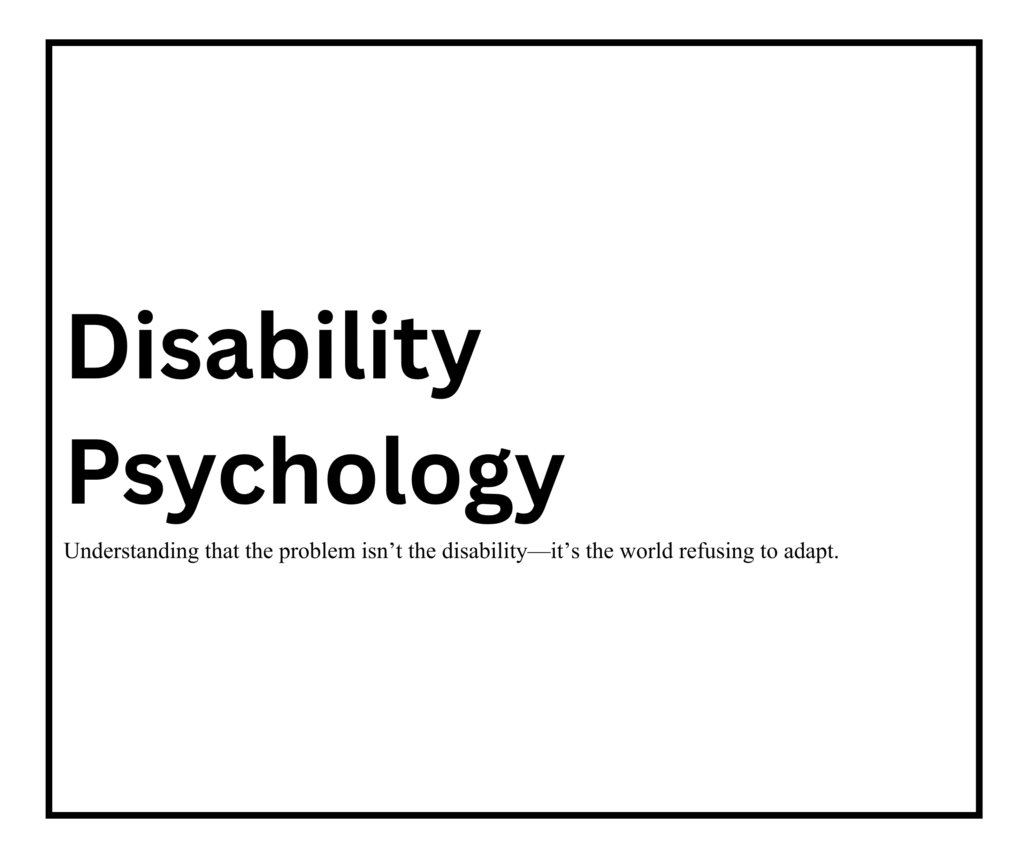
Disability Psychology is the study of how physical, intellectual, sensory, or developmental disabilities affect an individual’s emotional well-being, behaviour, identity, relationships, and quality of life. It examines the psychological adjustments, challenges, and strengths of individuals living with disabilities, as well as the environmental and social factors that influence their experiences. Disability psychology advocates a holistic view: disability is not just a medical condition but a lived experience shaped by personal resilience, societal attitudes, accessibility, and support systems. The field focuses on empowerment, inclusion, adaptation, and mental health support across the lifespan.
Traditional views treated disability as a physical or medical problem requiring correction. Disability psychology expands this view by emphasising the social and psychological dimensions. The social model highlights how society’s barriers—physical, attitudinal, educational, and institutional—create limitations, not the disability itself. For example, a person using a wheelchair is disabled not by their body alone but by inaccessible buildings or discriminatory attitudes. Disability psychology integrates both perspectives, helping individuals adapt emotionally while encouraging society to create accessible, inclusive environments.
Disability psychology covers a wide range of conditions, including physical disabilities such as cerebral palsy, spinal cord injuries, muscular dystrophy, or chronic illnesses; sensory disabilities such as visual or hearing impairments; intellectual disabilities involving limitations in cognitive functioning and adaptive skills; developmental disabilities such as autism or Down syndrome; and learning disabilities like dyslexia or ADHD. Each disability presents unique challenges and strengths, requiring tailored psychological assessment and support. The field acknowledges that disability experiences vary widely and should never be generalized.
Living with a disability may bring emotional challenges such as frustration, anxiety, depression, identity struggles, low self-esteem, or feelings of isolation. Individuals may experience grief over functional loss, difficulty adjusting to new limitations, or stress from constant dependence on others. Social stigma, discrimination, and lack of accessibility often increase emotional burden. However, many individuals also develop strong resilience, adaptability, creativity, and problem-solving skills. Disability psychology helps identify emotional needs and promote mental well-being by validating experiences and building healthy coping strategies.
Psychological assessment for individuals with disabilities includes evaluating cognitive functioning, emotional health, adaptive behaviours, and environmental factors. Tools such as IQ tests, adaptive functioning scales, neuropsychological assessments, behavioural evaluations, and sensory processing assessments may be used. The goal is not to label but to understand strengths, challenges, and necessary supports. Assessments help determine eligibility for special education services, therapy approaches, rehabilitation plans, or workplace accommodations. A culturally sensitive and disability-aware approach ensures accuracy and respect during assessment.
Treatment focuses on improving emotional well-being, enhancing independence, strengthening coping skills, and supporting social participation. Cognitive Behavioral Therapy (CBT) helps individuals manage negative thoughts and emotional distress. Acceptance and Commitment Therapy (ACT) encourages self-acceptance and values-based living. Rehabilitation psychology supports adjustment to physical changes, chronic pain, or functional limitations. Occupational therapy helps improve daily living skills, while speech therapy supports communication difficulties. Psychologists often work with families to create supportive environments at home. Vocational counselling assists individuals in finding suitable employment, while assistive technologies improve independence and accessibility.
A psychologist provides emotional support, practical guidance, and advocacy for individuals with disabilities. They help individuals adjust to changes, build coping skills, manage mental health challenges, and develop confidence. Psychologists also address experiences of stigma, discrimination, and identity struggles. They work with schools, employers, and families to promote inclusivity and ensure the individual receives necessary accommodations. For children with disabilities, psychologists assist with behaviour management, social skills training, and educational planning. Their role extends beyond therapy—they help create systems that empower rather than restrict.
Self-help strategies include building strong support networks, engaging in regular physical activity within one’s abilities, using assistive devices confidently, and practicing self-compassion. Journaling emotions, participating in peer support groups, and advocating for one’s needs strengthen empowerment. Setting realistic goals and celebrating small victories boosts confidence. Mindfulness and grounding techniques help manage anxiety or frustration. Learning about disability rights, accessibility resources, and available services increases independence and confidence. Most importantly, individuals benefit from viewing themselves beyond their disability—recognizing strengths, interests, and capabilities.
Disability Psychology emphasises that individuals with disabilities are not defined by their limitations but by their strengths, identities, and lived experiences. Emotional well-being is influenced not only by the individual’s condition but by the support, respect, and accessibility provided by society. With psychological support, inclusive environments, and empowering interventions, individuals with disabilities can lead fulfilling, meaningful lives. Disability Psychology encourages understanding, compassion, and awareness, promoting a world where diversity is embraced and every person is given equal opportunity to thrive.
Emotion Regulation refers to the ability to recognise, understand, and...
Read MoreConnect with others on a shared path of growth, healing, and support. You’re not alone—we’re in this together.
WhatsApp us